
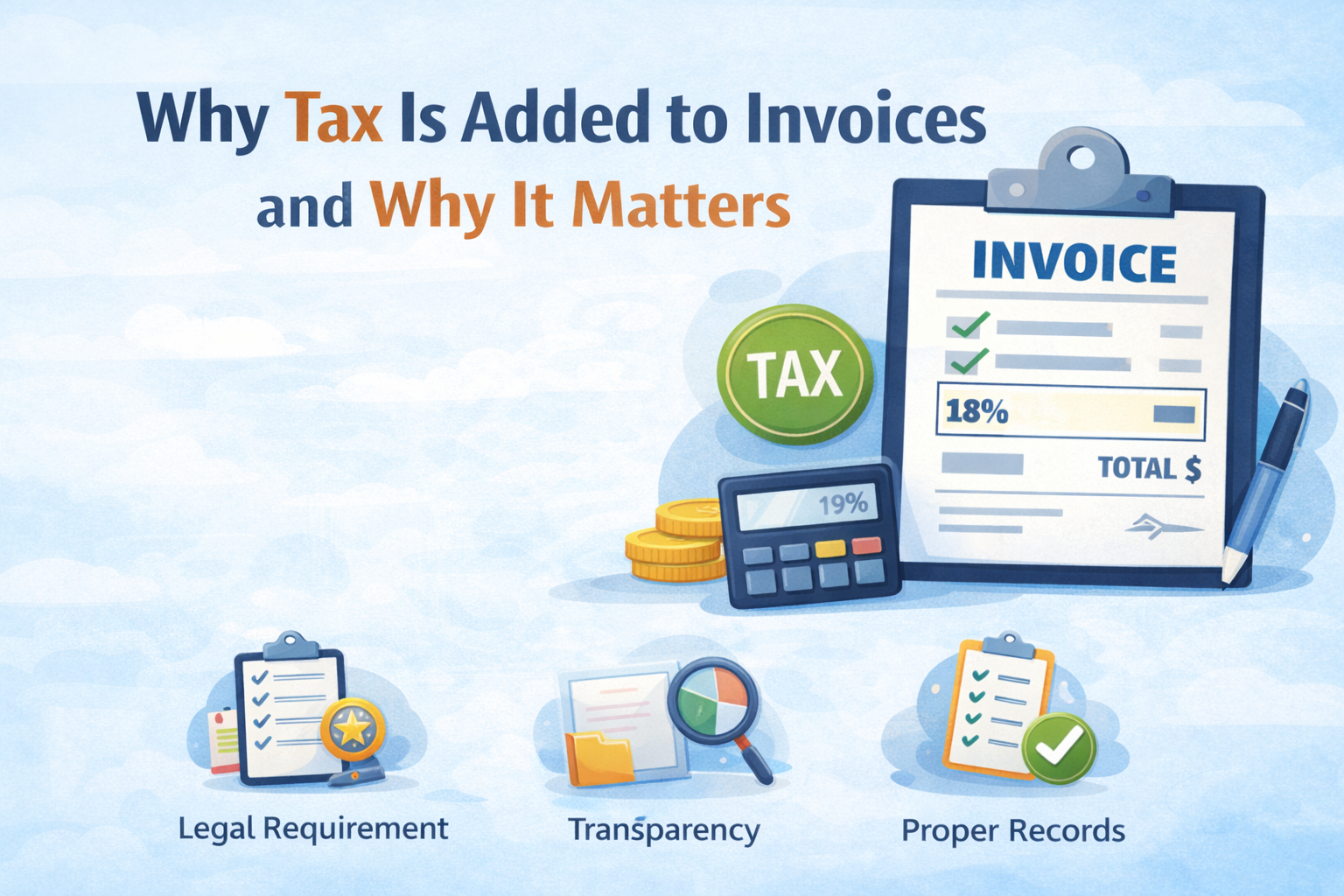
Why Tax Is Added to Invoices and Why It Matters?
Many freelancers and small business owners feel confused when it comes to tax on invoices. Questions like “Do I need to add tax?”, “Which tax should I charge?”, or “Why does tax even matter?” are very common, especially for beginners.
This guide explains what tax on an invoice means, why it is added, and why it matters, using simple language and practical examples.
What Does “Tax on an Invoice” Mean?
Tax on an invoice refers to an additional amount charged on top of the price of goods or services. This tax is usually collected on behalf of the government and later paid to the relevant tax authority.
Depending on the country, this tax may be called:
GST (Goods and Services Tax)
VAT (Value Added Tax)
Sales Tax
When you add tax to an invoice, you are showing the client:
The base price of your service
The tax amount
The final total they need to pay
Why Is Tax Added to an Invoice?
Tax is added to invoices for legal and financial reasons.
1. Legal Requirement
In many countries, registered businesses are legally required to charge tax on certain goods or services. Failing to include tax when required can lead to penalties or legal issues.
2. Transparency for Clients
Adding tax separately on an invoice helps clients understand:
The actual cost of the service
How much tax is being charged
Why the final amount is higher than the base price
Clear tax breakdown builds trust and avoids confusion.
3. Proper Financial Records
Invoices with tax details help maintain accurate financial records. They are important for:
Tax filing
Audits
Business reporting
Without proper tax information, tracking income and expenses becomes difficult.
Who Needs to Add Tax to an Invoice?
Not everyone needs to add tax. It depends on factors such as:
Your country’s tax laws
Whether you are registered for tax
The type of service or product you provide
Whether your client is local or international
For example:
A registered business may be required to add tax
A small freelancer below a certain income threshold may not
It is always best to understand the basic rules that apply to your situation.
Common Types of Tax on Invoices
GST or VAT
This is a consumption tax added to most goods and services in many countries. It is usually shown as a percentage of the total amount.
Sales Tax
Common in some regions, sales tax is typically added at the point of sale and shown separately on the invoice.
The exact name and rate of tax depend on local laws.
What Happens If You Don’t Add Tax When Required?
Not adding tax when it is required can lead to:
Penalties or fines
Issues during audits
Loss of credibility with clients
Problems while filing tax returns
Even if a client does not ask for tax details, it is still your responsibility to follow tax rules.
How to Show Tax on an Invoice
A professional invoice usually shows tax in a clear and simple way.
Typical format:
Subtotal (service or product cost)
Tax amount (with percentage)
Final total
This makes the invoice easy to understand for both you and your client.
Common Tax Mistakes Beginners Make
Many beginners make these mistakes:
Forgetting to add tax
Using the wrong tax rate
Not mentioning tax separately
Charging tax without being registered
Mixing personal and business tax records
Understanding the basics helps avoid these issues.
Do International Clients Pay Tax?
Tax rules for international clients can be different. In some cases:
Tax may not apply
Different tax rules may apply
Reverse charge mechanisms may be used
Because rules vary by country, it is important to check basic guidelines or consult a professional if needed.
Why Clear Tax Invoices Matter for Your Business
Clear tax invoices help you:
Stay compliant with laws
Look professional
Avoid disputes
Maintain accurate records
Prepare for future business growth
Even simple businesses benefit from proper tax documentation.
Simplifying Tax Invoicing
Tax can feel complicated, especially for beginners. Using a structured invoice format helps ensure:
Tax is shown clearly
Calculations are accurate
Invoices look professional
GetSnapBill helps users create invoices with clear tax details, making the process easier and less confusing.